Opening the post0.0s
10 min read
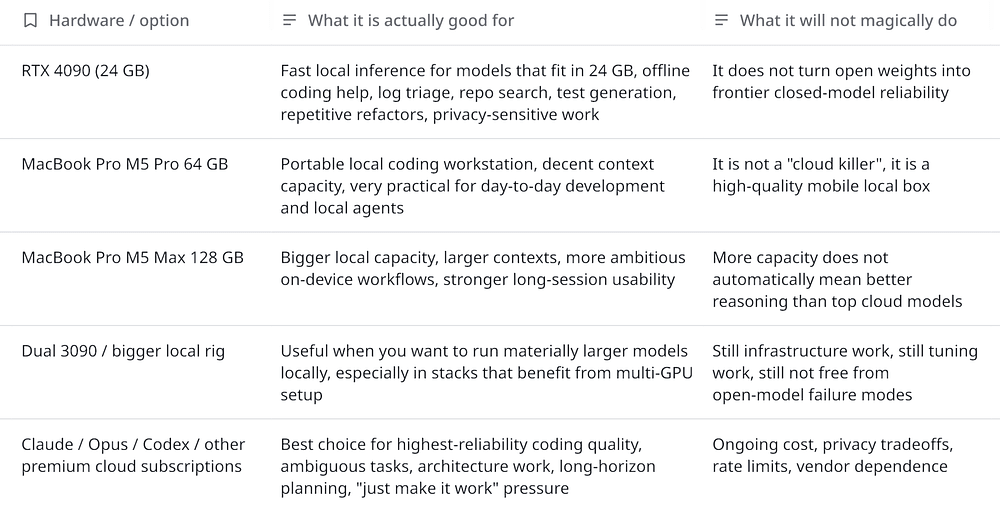
Consumer hardware is already good enough to do meaningful agent work locally but it is not good enough to make frontier cloud models irrelevant.
Most people ask the following question:
Can my RTX 4090, or M5 Max 128GB, replace Sonnet, Opus, GPT, or the latest premium coding model?
But in this article, I will answer the following question:
What GPU can run parts of the agent loop locally with good performance?
And once you frame it this way, the answer gets much more interesting.
A single RTX 4090 can already handle a serious amount of coding work with the right open model, the right quantization, and a harness that doesn't waste half your context window on boilerplate.
Apple Silicon machines like an M5 Pro 64GB or M5 Max 128GB are compelling for a different reason: not because they magically beat the cloud, but because they buy you local capacity, mobility, privacy, and larger-context workflows.
Meanwhile, the cloud still wins whenever you need top-end reasoning reliability, long-horizon planning, or consistently excellent output under pressure.
In this article, I want to make a developer-first case for how to think about consumer hardware in 2026 if you are building AI features, coding agents, or internal agentic workflows.
We will go through:
Let's get into it.
Here is the short version.
If your job is to ship product:
You should ask whether local can take ownership of the cheap, repetitive, private, or deterministic parts of the agent workflow.
That is where the ROI is, not in pretending a 24 GB VRAM is secretly an H100 cluster.
Editor's note: To mark 10,000 community members, we recently released Compass, a blueprint of a production-grade customer support agent built to demonstrate how modern agent systems are actually engineered and operated in real environments. Compass is part of our Agent Foundry program and you can get it here completely for free.
Most local-model arguments collapse three very different things into one bucket:
That is a terrible abstraction boundary.
In real agentic systems, these three layers interact constantly.
A weaker model with a disciplined harness, low-noise prompts, proper tool formatting, and good project instructions can outperform a stronger model running inside a bloated scaffold that dumps garbage context into every turn.
This shows up repeatedly in practice.
Some popular coding harnesses throw useless context and bloated prompts at the model, which hurts reasoning before the task even starts.
For example, Cline's local-model guide explicitly recommends enabling compact prompts, which it says reduces prompt size by 90% while keeping core functionality intact.
OpenCode gives you an AGENTS.md mechanism, a dedicated Plan agent for analysis without writes, a default Build agent for full execution, and subagents like Explore for read-only repo navigation.
Because agent performance is partly an orchestration problem.
Similarly, Claude Code is an agentic coding tool that reads your codebase, edits files, runs commands, integrates with development tools, stores instructions in CLAUDE.md, supports MCP, and can run multiple agents.
So before we even touch hardware, let's establish the actual engineering principle: Local-model success is downstream of context discipline.
That means:
If you ignore those rules, you can absolutely spend a fortune on hardware and still get disappointing results.
There is a real difference between speed and capacity, and that distinction matters more in agentic workflows.
The 4090 is still incredibly relevant because a lot of the new "surprisingly capable" open coding models are not giant dense models.
They are often sparse MoE models with small active parameter counts or otherwise efficient enough to feel fast on consumer GPUs.
The current Ollama model page for qwen3.6:35b-a3b lists a 24 GB quantized artifact, which is exactly why this class of model gets so much attention.
That single fact changes the local development conversation.
A model in this family can sit inside the memory envelope of a 4090-class card instead of immediately forcing you into workstation or server-grade hardware.
This is the practical consequence:
then a 4090 can absolutely become a real engineering asset.
That does not mean it replaces Claude Sonnet or Opus on your hardest work, but it can do a shocking amount of useful work before you need to escalate.
That is already enough to save money and reduce cloud dependence.
The 4090 is generally the more obvious answer for raw single-model local speed-per-dollar when the model fits in 24 GB, but Apple Silicon machines buy you things many local-LLM discussions undervalue:
The current oMLX community benchmark page is especially interesting here because it gives community-submitted numbers rather than vendor marketing claims.
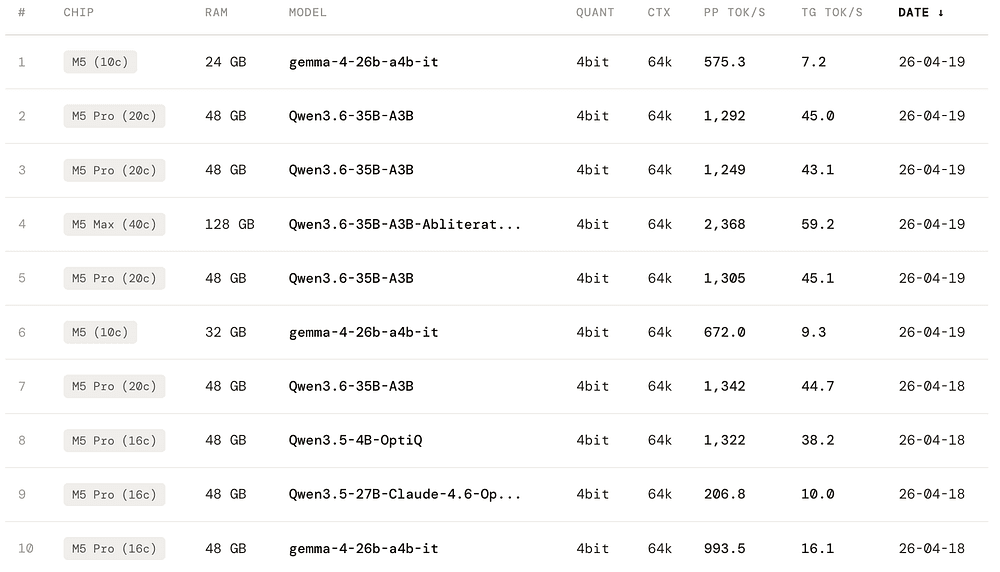
It shows a few examples like:
gemma-4-26b-a4b-it at 7.2 tok/s at 64k contextQwen3.6-35B-A3B at 45 tok/s at 64k contextQwen3.6-35B-A3B-Abl... at 59.2 tok/s at 64k contextThese numbers show you the current working envelope developers are actually achieving on these machines, and it's good to see that Apple Silicon has crossed the threshold from novelty to usefulness.
They are now viable for:
And for many developers, that is the real win.
This is where the conversation gets more honest.
If your goal is:
then an M5 Pro 64 GB already looks like a rational purchase.
If your goal is:
then M5 Max 128 GB is clearly more capable.
But you should buy it for capacity, not because you think the extra memory suddenly grants frontier-model reasoning.
You can use your personal machine as a subagent for Claude Code and Codex, offloading "dumb heavy lifting" such as linting, boilerplate, or grepping massive logs.
Local models can own the parts of the agent loop that are expensive but not precious.
Your local hardware then becomes:
And what matters is task routing.
A premium cloud model is overkill for a lot of work that happens in developer workflows:
So the best way to position your local machine is as a cost-shaving, privacy-preserving execution substrate.
Let's stop being abstract and map this to real engineering work.
Modern open coding models are good enough to answer questions like:
That is especially true when the harness is read-only and context-aware, like OpenCode's Explore subagent or a read-only plan mode.
This is a massively underrated use case.
It is often expensive in cloud tools because the input is huge and the reasoning demand is moderate.
Local is ideal when the job is:
This is exactly the kind of "high input, bounded output" workload where privacy and cost matter more than the last five percent of intelligence.
There is real value in using local models for:
This is the actual work that teams burn hours on.
Once you pair a local model with project instructions in AGENTS.md or CLAUDE.md, a lot of day-to-day work becomes much more stable:
OpenCode explicitly leans into this with AGENTS.md initialization and reuse. Claude Code does the same through CLAUDE.md.
Open models are increasingly capable here, especially when the bug is:
Local is fine for first pass bug work, provided you still verify thoroughly.
This includes:
Yes, local models can do this.
But only if the tool-call format is reliable and the server/runtime stack supports it cleanly.
Qwen-Agent even provides a wrapper around OpenAI-compatible endpoints to add function-calling behavior when the underlying endpoint does not provide it cleanly.
Open coding models are now credible enough that ignoring them is a budgeting mistake.
A few examples worth noting:
Qwen has become impossible to ignore.
The newer Qwen3.6 35B-A3B model on Ollama is especially relevant to consumer hardware because it fits the 24 GB class and is explicitly framed around agentic coding and thinking preservation.
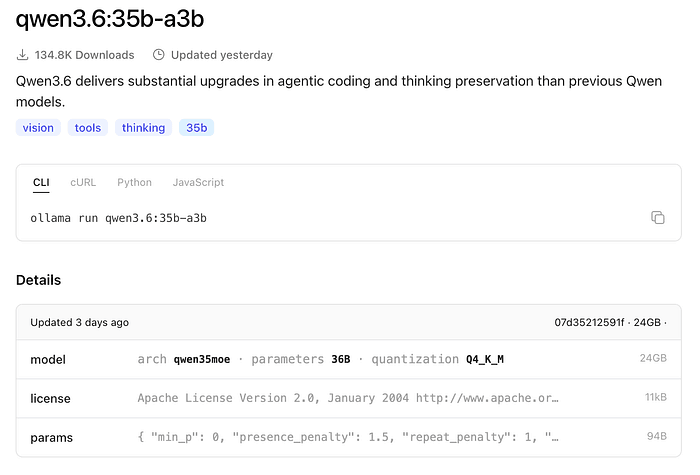
This is the category of model that makes 4090-class local setups genuinely useful.
The GLM directly targets agent workflows. GLM-4.7 is performant at multilingual agentic coding, terminal-based tasks, tool use, and UI quality, and shows stronger behavior in frameworks like Claude Code, Kilo Code, Cline, and Roo Code.
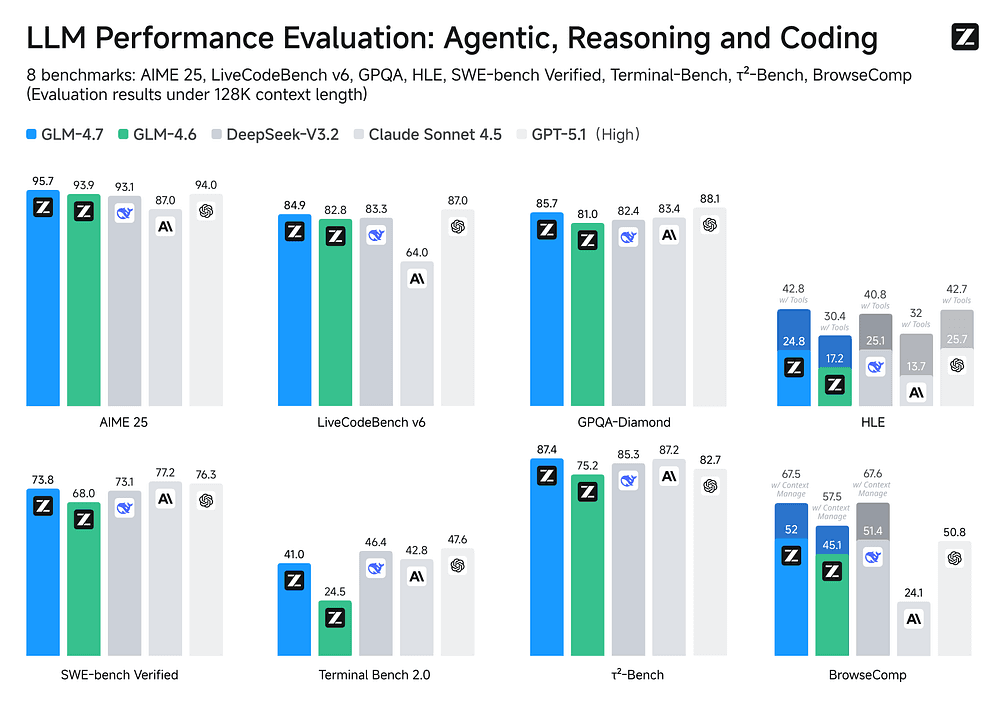
The interesting nuance here is that GLM is not only competing on raw benchmark numbers but also competing on how well it behaves inside agent scaffolds.
The MiniMax-M2.1 has a similar play, emphasizing robustness for coding, tool use, instruction following, long-horizon planning, and multi-language development.
The team also publishes benchmark tables that compare against premium closed models across SWE-bench, multilingual coding, Terminal-bench, and VIBE-style full-stack development.
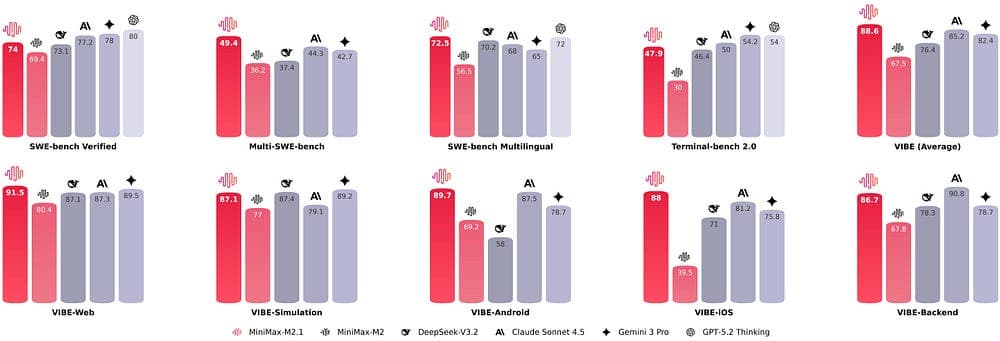
Again, the important point is not whether every published benchmark exactly predicts your use case.
Open models are increasingly being trained and evaluated as agentic development models, which matters a lot when you build real products.
I am going to give you three viable local patterns:
And here is my actual recommendation.
Think about:
Then route accordingly, that is how you win.
Start building systems where:
That is the practical future, which is already here.