When Should Your Agent Wake Up? ReLiveGym Treats Timing as Part of Agent Quality
Agent Native•October 5, 2026
Production agents increasingly work differently.
A market-monitoring agent, a news-triage bot or a social-media watcher runs unattended for days or weeks.
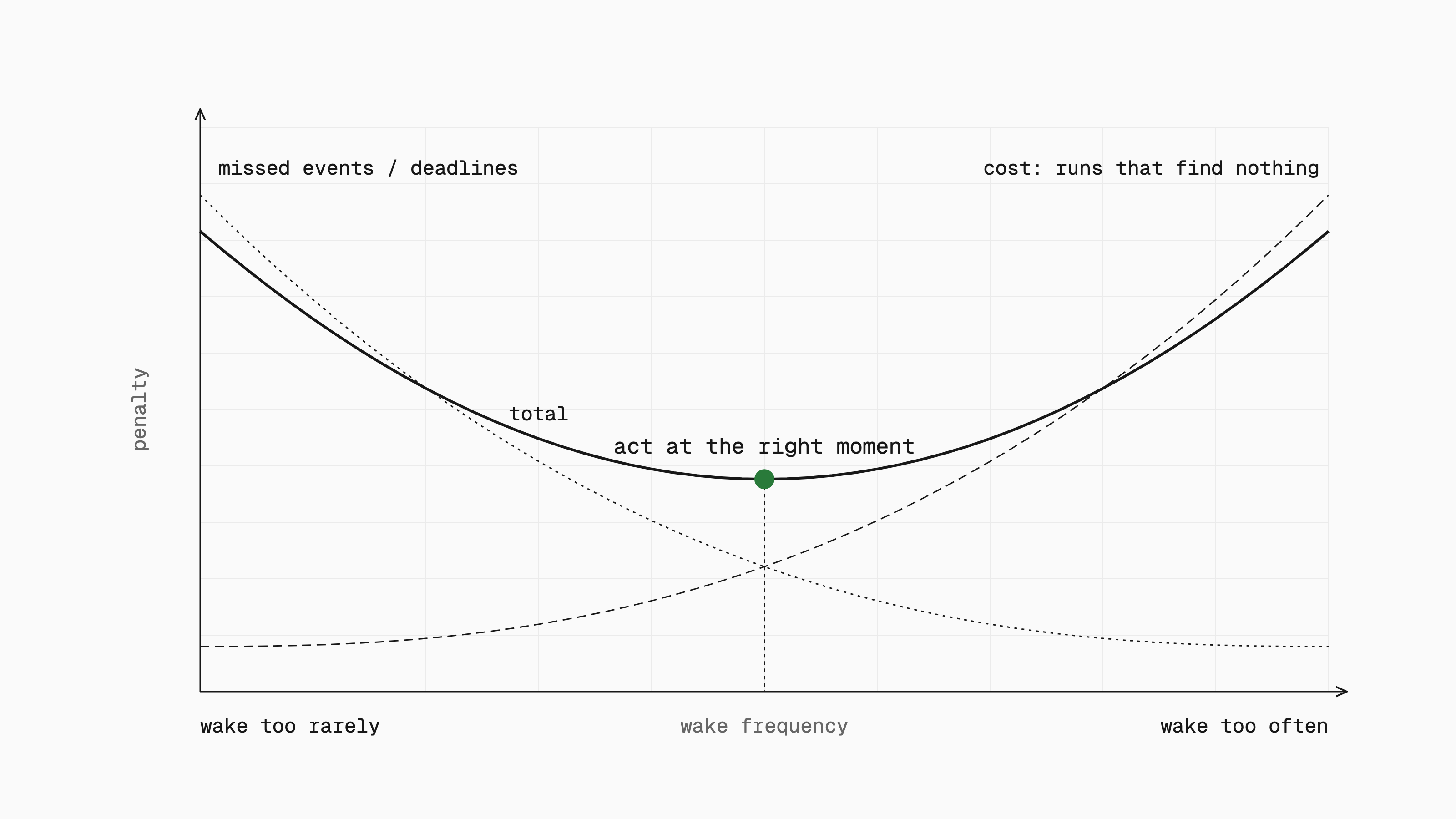
The world keeps changing while the agent is idle, and at some point the agent has to decide whether this is the moment to act.
ReLiveGym is a new diagnostic benchmark that targets this gap.
Agents act sparsely over simulated weeks while real-world news, market and social-media streams are replayed in chronological order.
The main finding matters to anyone building long-running agents:
How an agent decides when to act is a harness-design axis in its own right. The best design varies by task, and sometimes by model.
So you can't just pick the strongest model and run it on a 15-minute cron. The trigger policy is part of the system you're evaluating.
Here's what ReLiveGym measures, what has been verified so far, how to get started with the repository, and how to apply its ideas to your own agent harness today.
The problem: long-horizon work vs. long-lived agents
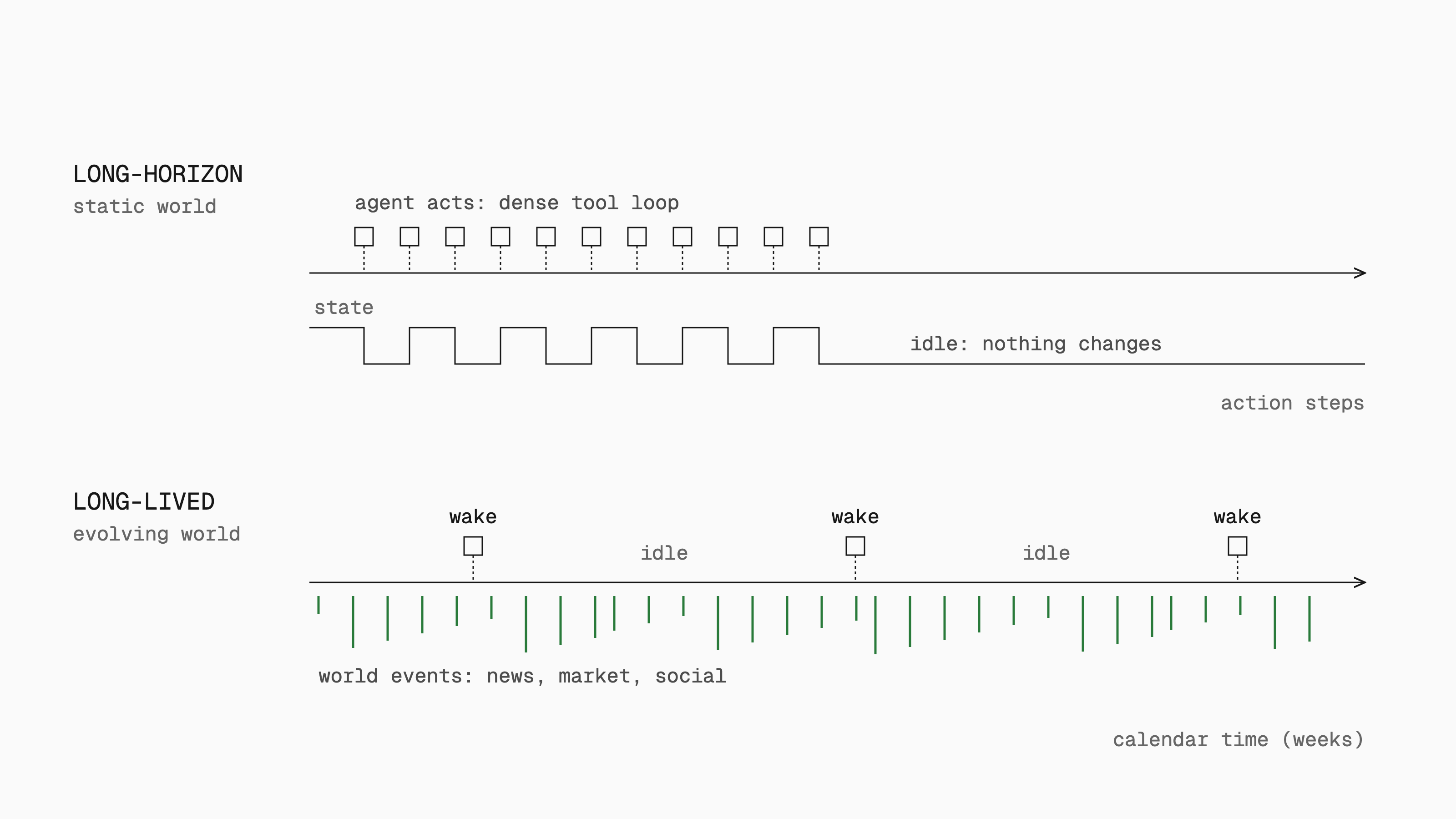
The paper separates two ideas that are easy to mix up:
Long-horizon agents do long sequences of actions, such as multi-step coding, research or browsing. The environment is usually static and only changes when the agent acts.
Long-lived agents stay deployed over calendar time. They're expected to run unattended for days or weeks, act at the right moments, and adapt as the environment changes.
Existing long-horizon work doesn't fully capture these challenges, because it mostly assumes an environment that doesn't change over time.
These are exogenously evolving environments: news breaks and prices move whether the agent is awake or not. The agent has to choose when to step in without exhausting a finite token budget.
The same tension shows up in any agent you deploy:
Wake too often and you pay for model runs that find nothing new.
Wake too rarely and you miss the event, the deadline or the price move.
What's in ReLiveGym
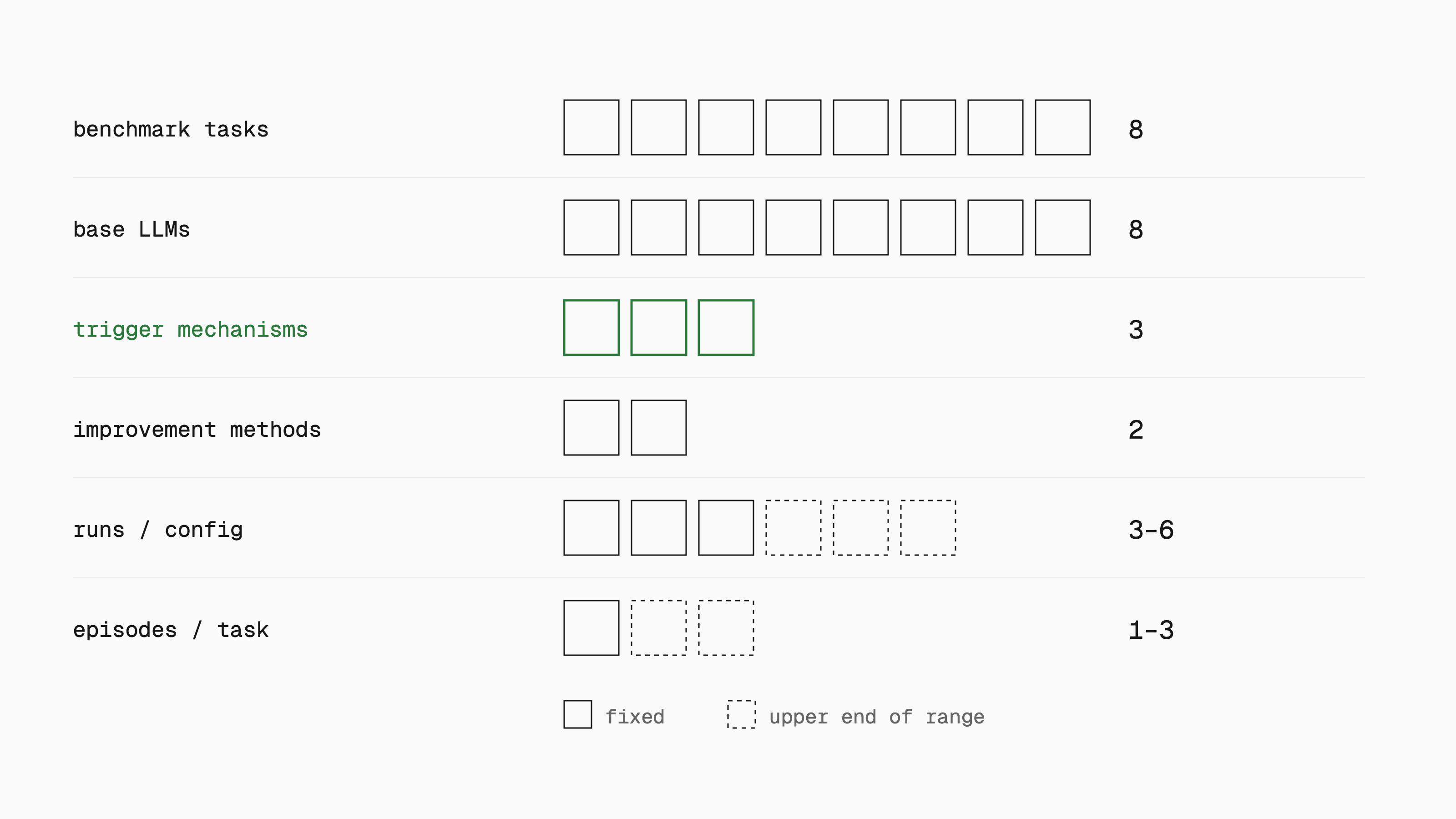
Here is the experimental setup:
Quantity
Reported value
Benchmark tasks
8
Base language models evaluated
8
Wake-up (trigger) mechanisms
3
Continuous-improvement methods
2
Repeated runs per configuration
3–6
Episodes per task
1–3
Paper length
9 pages (v1, Sept 30, 2026)
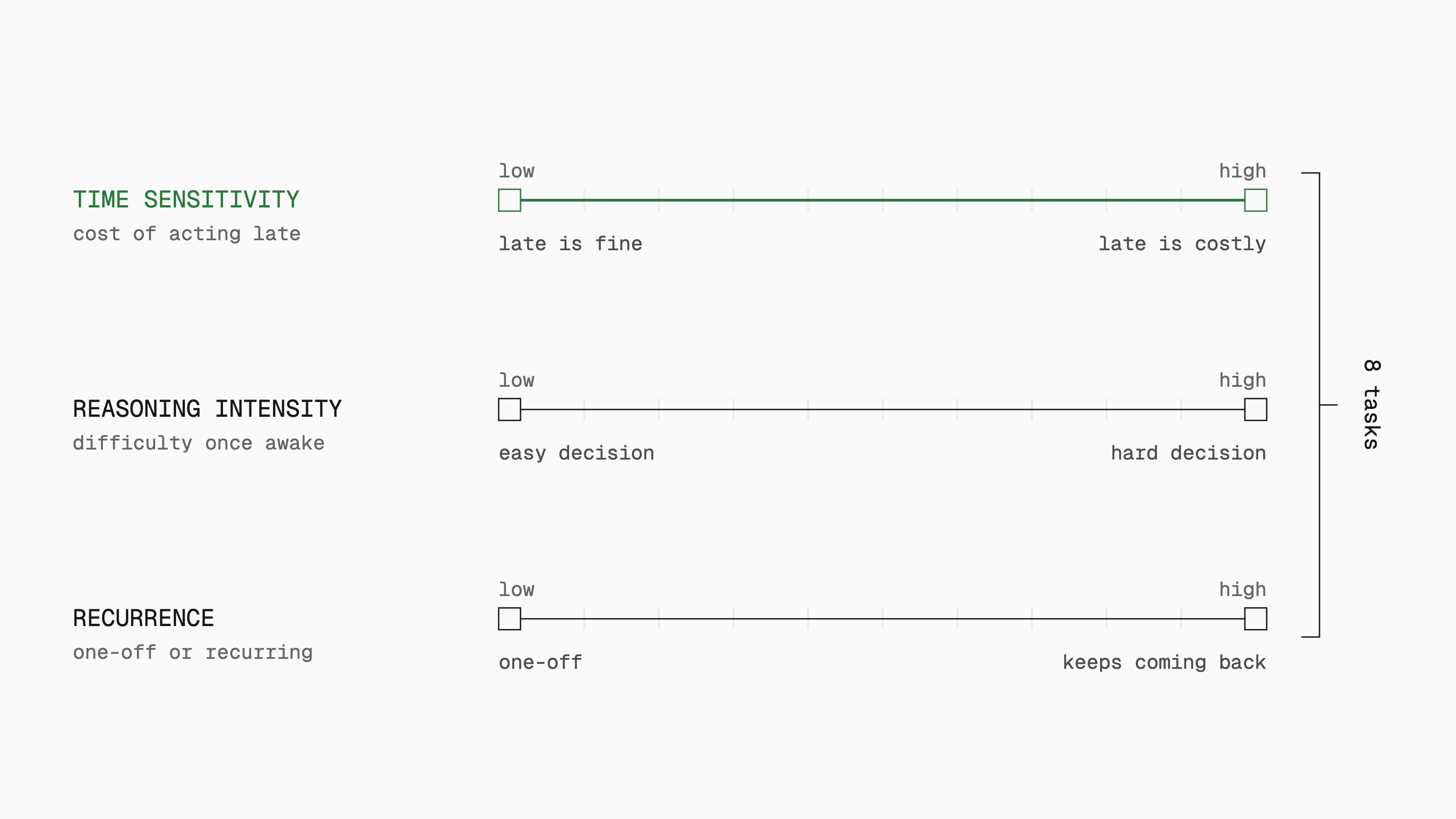
The eight tasks vary along three axes:
Time sensitivity: how much it costs to act late.
Reasoning intensity: how hard the decision is once the agent is awake.
Recurrence: whether the task is a one-off or keeps coming back.
The data is real news, market and social-media data, replayed on a simulated clock. The code and data-curation scripts are released, and that the required data is publicly available under permissive licenses.
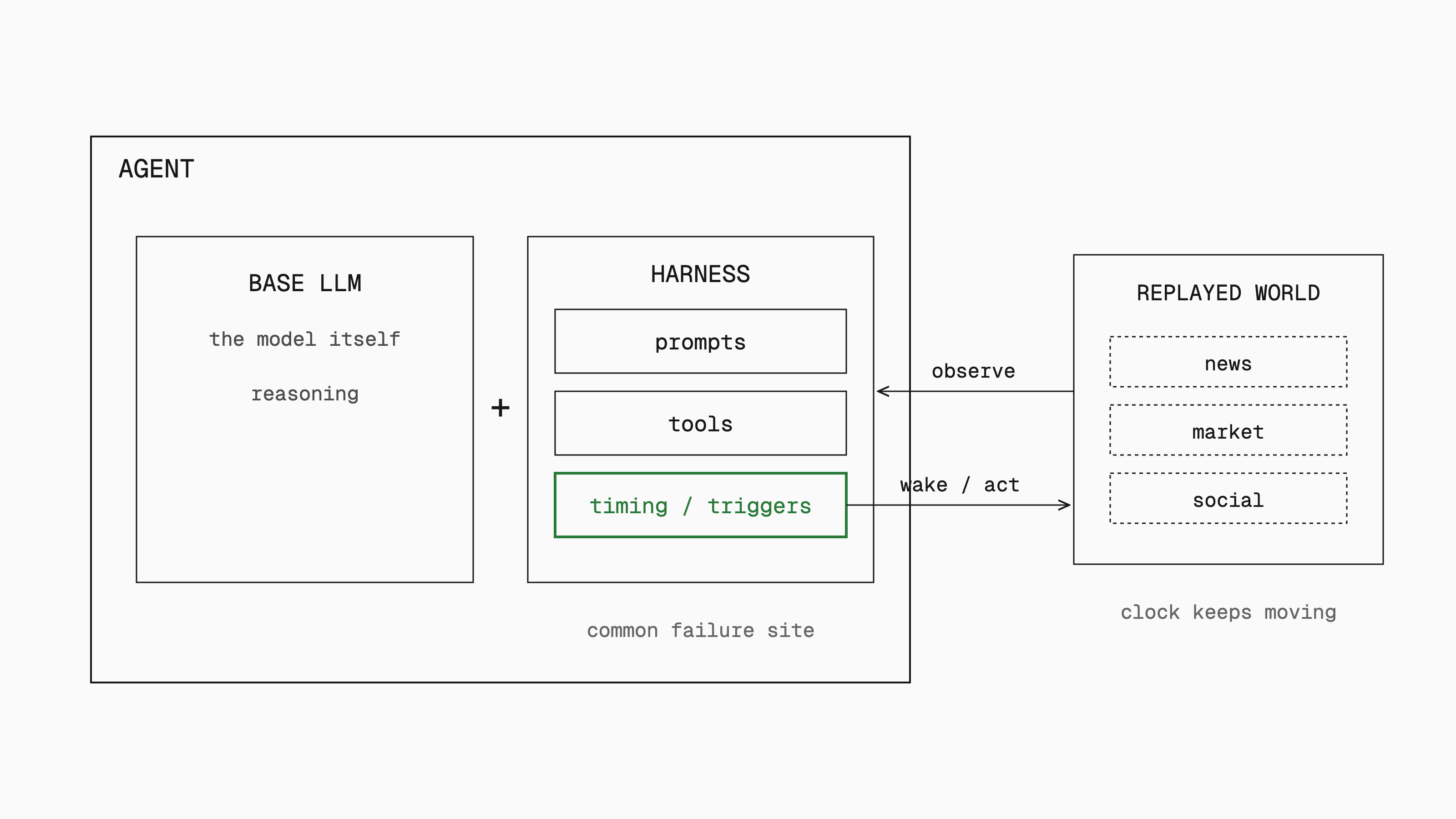
Agent = model + harness
ReLiveGym evaluates two things together:
Base LLM: the model itself.
Harness: the code that manages prompts, tools and timing.
That split is the most useful mental model: When a long-lived agent fails, the cause is often the harness (it woke at the wrong time, or never learned from a mistake), not the model's reasoning. For a way to turn harness failures like these into lasting checks, look at turning agent failures into eval tasks.
The three trigger mechanisms
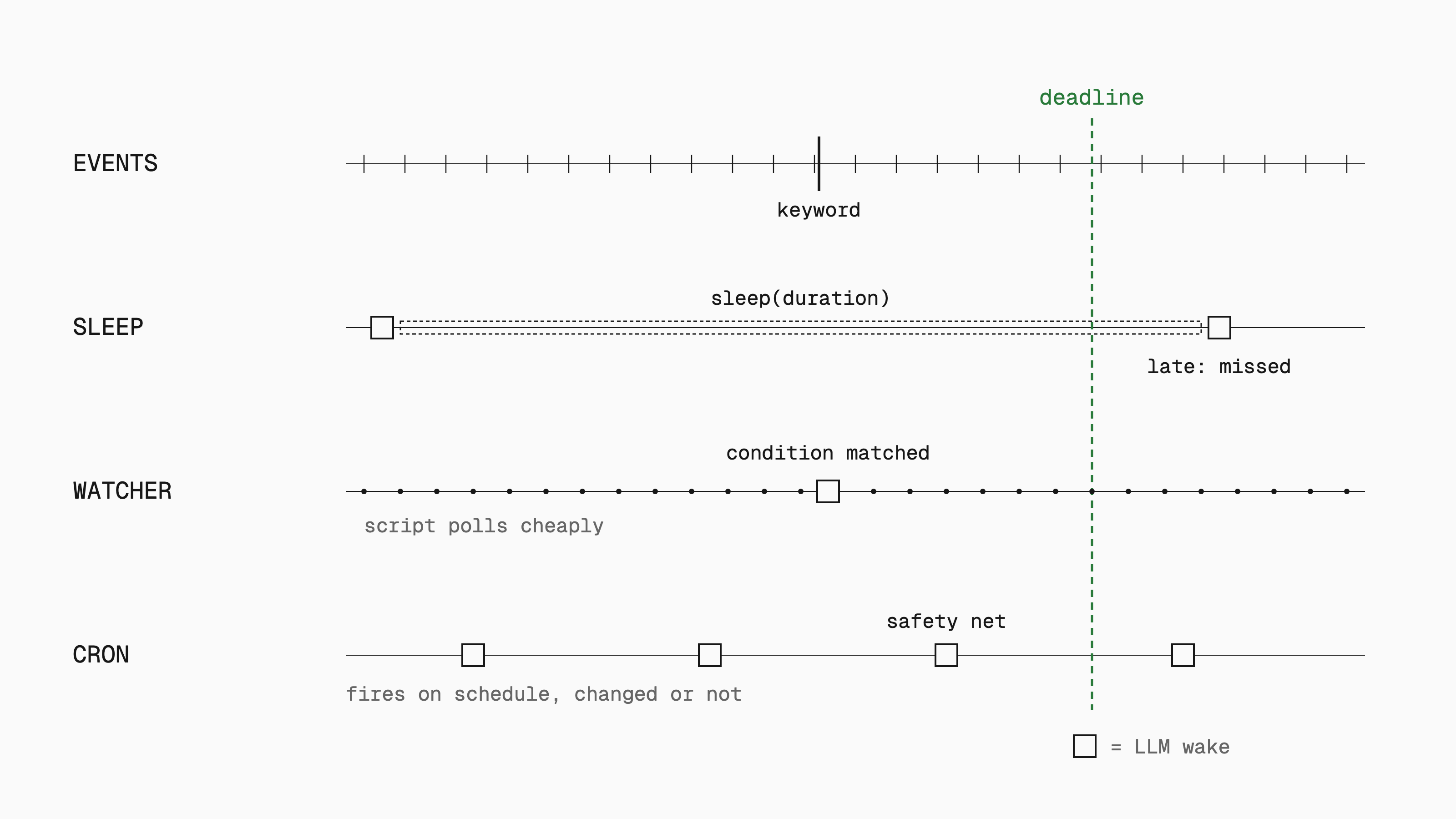
The harness compares three ways to decide when the agent wakes:
Trigger
How it works
Typical failure mode
Sleep
The agent calls a tool to set how long to sleep before its next turn
The agent oversleeps and misses deadlines
Watcher
The agent writes a Python script that polls the environment and wakes the LLM only when a condition is met (e.g., a keyword appears in the news)
The condition is wrong or too narrow, so the agent stays asleep through the event that matters
Cron
The agent manages a schedule of recurring or one-time triggers
Rigid timing; wakes on schedule whether anything changed or not
On browser-based tasks, the sleep trigger often failed catastrophically because agents overslept and missed deadlines. Cron acted as a safety net.
That's the "optimal design varies across tasks" result in practice.
The sleep trigger is the cheapest and most flexible, and the watcher is the most efficient when its condition is correct. A dumb fixed schedule can still beat both when a deadline makes a missed wake-up unrecoverable.
Continuous improvement from hindsight feedback
The second axis is learning over time.
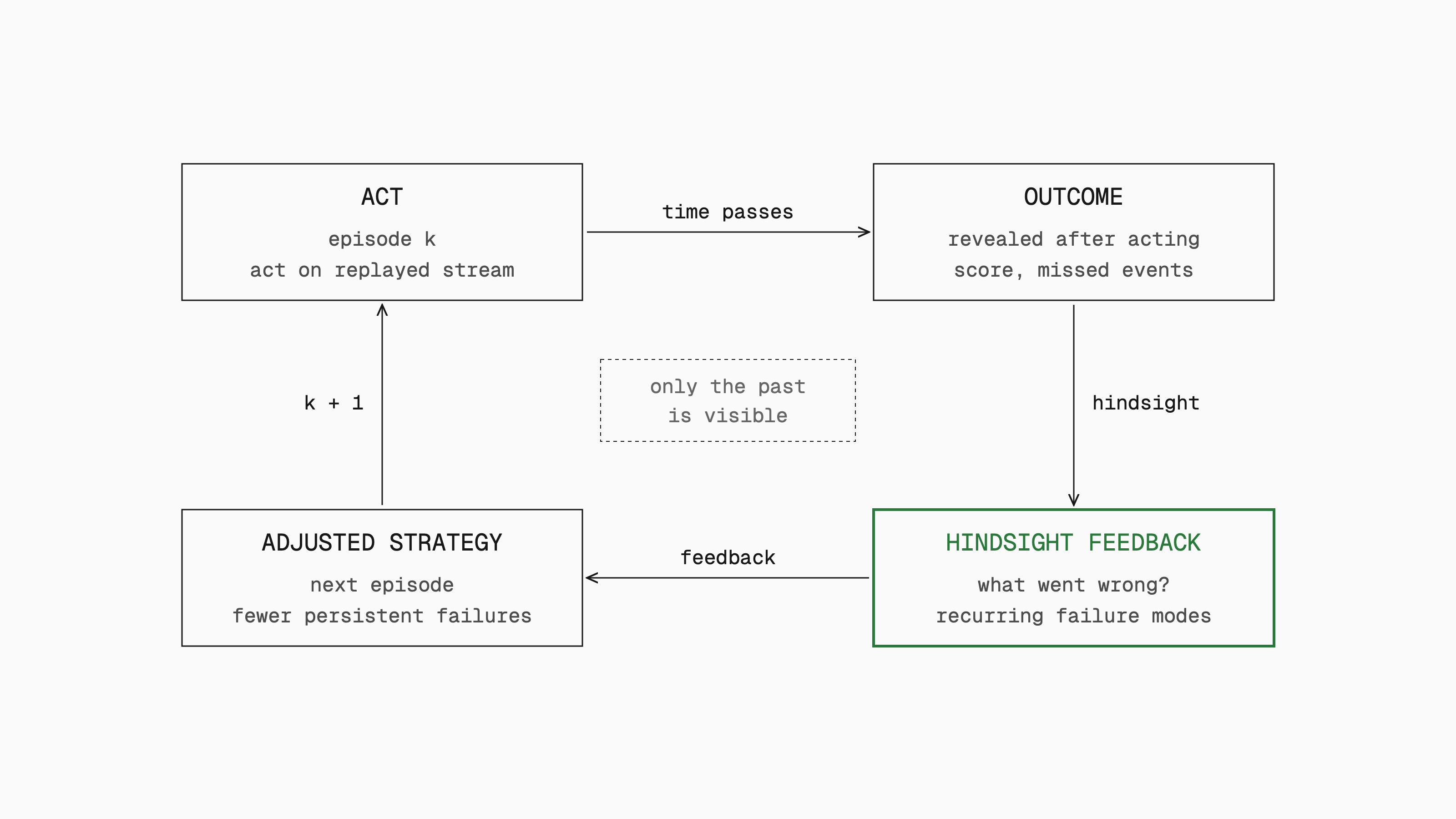
ReLiveGym tests two continuous-improvement methods that use hindsight feedback, meaning information available after the agent has acted. The goal is to see whether agents can fix the recurring failure modes that show up in long-lived tasks.
Simple test-time feedback mechanisms can significantly reduce persistent strategy failures.
Setup and quick start
Start by cloning the repository:
Code
text
git clone https://github.com/SaharaLabsAI/ReLiveGym
cd ReLiveGym
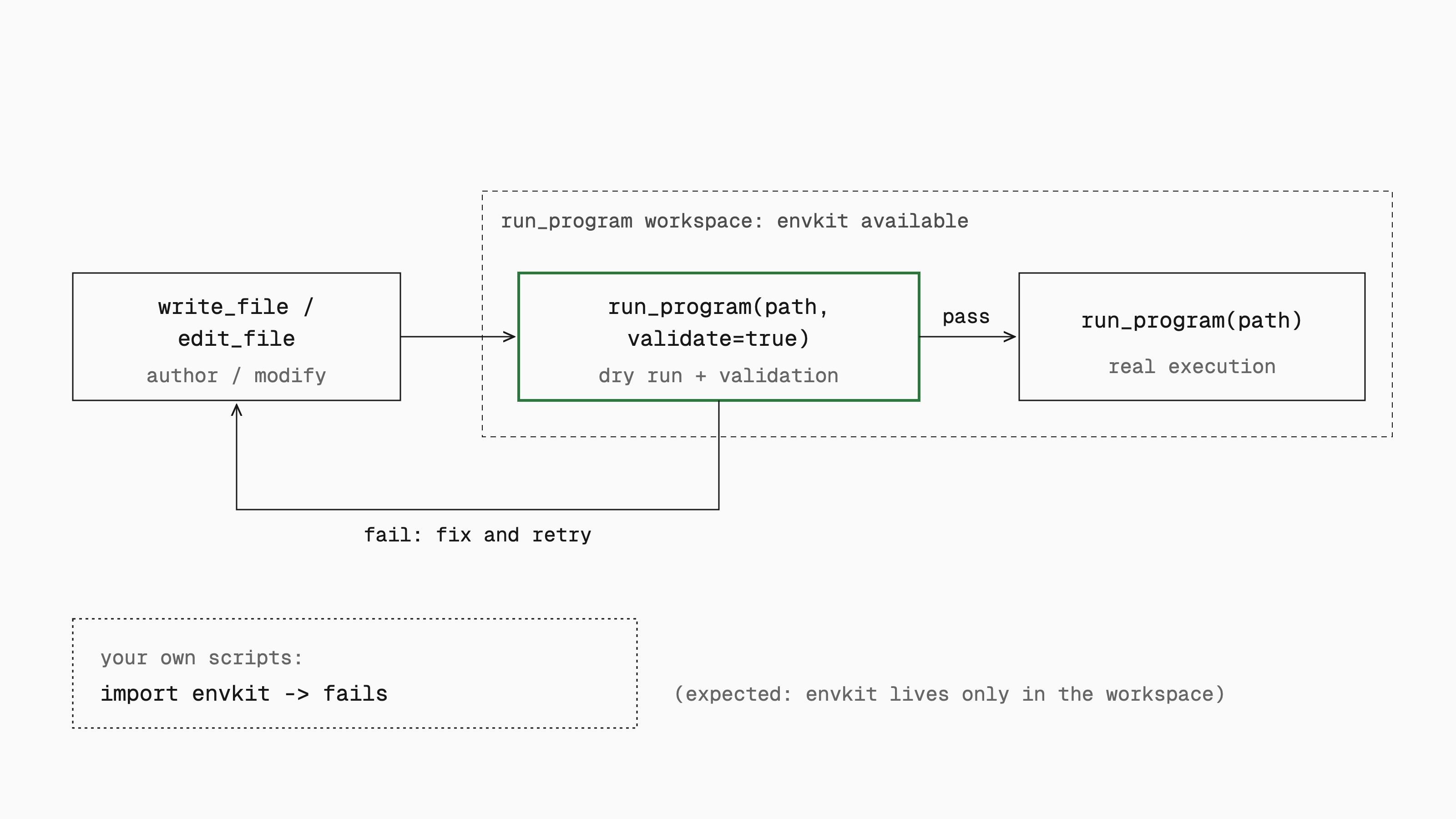
The execution workflow the paper documents
The agent writes or edits a program, does a dry run with validation, and then runs it for real:
Code
text
write_file / edit_file          # author or modify the program
run_program(path, validate=true)  # dry-run with validation
run_program(path)                 # real execution
envkit exists only inside the run_program workspace. It is not a module you can import from the repository. If you try to import envkit in your own scripts, it will fail, and that is expected.
This validate-then-execute step is worth copying even if you never run ReLiveGym. Agent-written programs that run unattended for weeks (watcher scripts are the obvious example) should get a dry run before they're trusted with real wake-ups.
Applying the idea in your own harness
You don't need the benchmark to use its main lesson: make the trigger policy a pluggable, testable part of the harness.
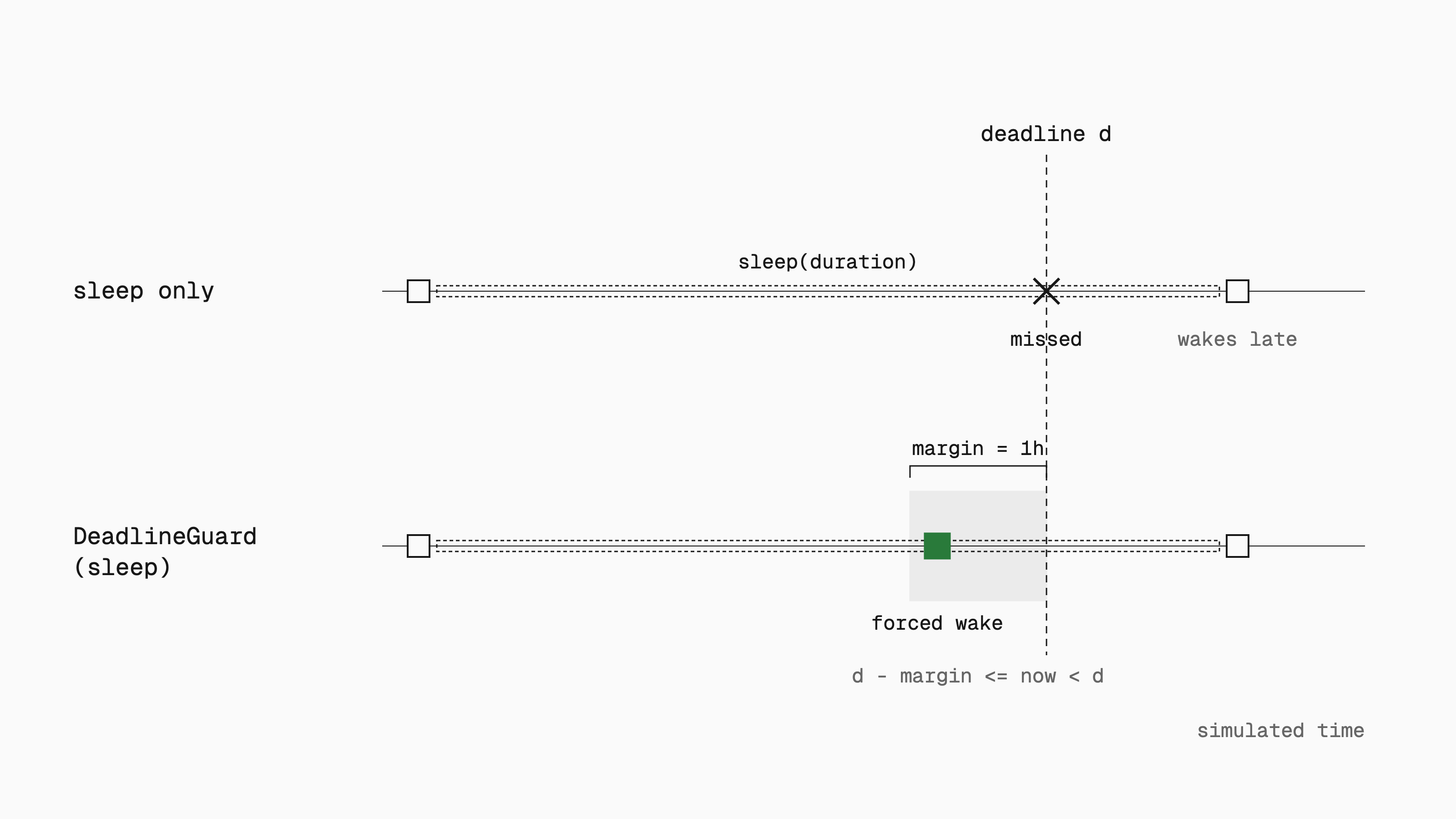
The sketch below shows that. It is my own illustration, not the ReLiveGym API. It implements the three trigger types from the paper, plus a deadline guard that reflects the "cron as safety net" observation, in a form you can replay against logged events.
Code
text
# Illustrative harness sketch -- NOT ReLiveGym's API.
from dataclasses import dataclass, field
from datetime import datetime, timedelta
from typing import Callable, Optional

@dataclass
class Decision:
    wake: bool
    reason: str

class SleepTrigger:
    """Agent picks its own sleep duration after each turn."""
    def __init__(self):
        self.next_wake: Optional[datetime] = None

    def set_sleep(self, now: datetime, duration: timedelta):
        self.next_wake = now + duration

    def check(self, now, observations) -> Decision:
        if self.next_wake is None or now >= self.next_wake:
            return Decision(True, "sleep elapsed")
        return Decision(False, "sleeping")

class WatcherTrigger:
    """Cheap predicate over new observations; LLM wakes only on a match."""
    def __init__(self, predicate: Callable[[list], bool]):
        self.predicate = predicate

    def check(self, now, observations) -> Decision:
        try:
            hit = self.predicate(observations)
        except Exception as e:
            # Fail open: a broken watcher should not silence the agent.
            return Decision(True, f"watcher error, failing open: {e}")
        return Decision(hit, "condition matched" if hit else "no match")

class CronTrigger:
    """Fixed recurring or one-time schedule."""
    def __init__(self, times: list[datetime]):
        self.pending = sorted(times)

    def check(self, now, observations) -> Decision:
        if self.pending and now >= self.pending[0]:
            while self.pending and now >= self.pending[0]:
                self.pending.pop(0)
            return Decision(True, "cron fired")
        return Decision(False, "not scheduled")

@dataclass
class DeadlineGuard:
    """Wraps any trigger and forces a wake before known deadlines."""
    inner: object
    deadlines: list[datetime]
    margin: timedelta = timedelta(hours=1)
    fired: set = field(default_factory=set)

    def check(self, now, observations) -> Decision:
        for d in self.deadlines:
            if d not in self.fired and d - self.margin <= now < d:
                self.fired.add(d)
                return Decision(True, f"deadline guard for {d.isoformat()}")
        return self.inner.check(now, observations)
Next, a replay loop. The point is the same as ReLiveGym's: run the same agent against the same replayed history with different trigger policies, and compare the results.
Code
text
# Illustrative replay loop -- feed it your own logged event history.
def replay(events, trigger, agent_step, start, end, tick=timedelta(minutes=15)):
    """events: list of (timestamp, payload), sorted by time."""
    now, i, buffer = start, 0, []
    stats = {"wakes": 0, "ticks": 0, "reasons": {}}
    while now <= end:
        while i < len(events) and events[i][0] <= now:
            buffer.append(events[i][1])   # only the past is visible
            i += 1
        d = trigger.check(now, buffer)
        stats["ticks"] += 1
        if d.wake:
            stats["wakes"] += 1
            stats["reasons"][d.reason] = stats["reasons"].get(d.reason, 0) + 1
            agent_step(now, buffer)       # your LLM call goes here
            buffer = []
        now += tick
    return stats
Track at least three things per policy:
Wake count. This is your cost proxy.
Missed deadlines or events. These are your reliability failures.
Task outcome. This is whatever your domain scores.
You shouldn't expect a single policy to win on all three across tasks.
A real-world example
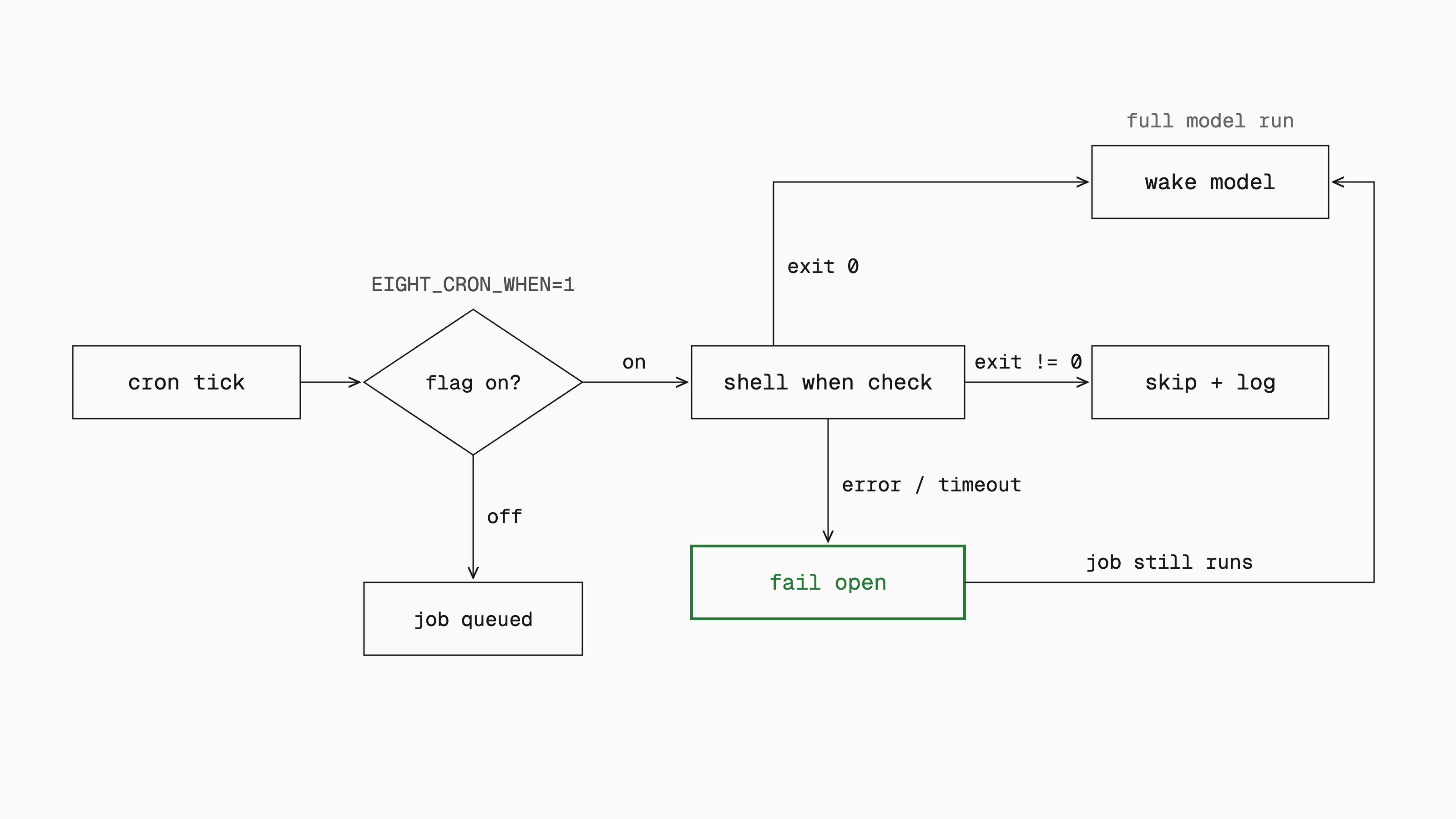
You can build an optional cheap shell when check that runs before an agent-prompt cron job is queued:
Exit code 0 wakes the model. Anything else skips the run and logs it.
The check sits behind an EIGHT_CRON_WHEN=1 flag.
A failing or timed-out check fails open, so the job still runs.
The stated reason is familiar to anyone running scheduled agents: quiet ticks still cost a full model run. This is a watcher layered over cron, with fail-open semantics so a broken watcher can't quietly turn the agent off. If you want to understand why the sensor layer matters so much here, see how a loop decides whether sensing is cheap or ruinous.
How ReLiveGym compares to other agent evals
Evaluation style
Typical focus
What ReLiveGym adds
Static long-horizon environments
Long action sequences in one persistent state
A world that changes on its own, with sparse wake-ups
Short interactive benchmarks
Immediate task completion and tool use
Behavior over simulated weeks, including acting at the right time
Hindsight feedback in a recurring, time-evolving environment, tied to task performance
It fits alongside related work on aging and lifelong agents:
LifelongAgentBench finds that experience replay helps on short, well-bounded tasks but becomes hard to scale on long-horizon ones.
Your Agents Are Aging Too argues that long-lived agents are "still evaluated like freshly initialized models."
ReLiveGym complements these rather than replacing them. Its distinctive variables are temporal evolution, sparse intervention, trigger policy and feedback-driven adaptation.
Limitations to keep in mind
Replay is not live reality. Chronological replay makes runs reproducible, but it can't capture live feedback loops, your agent's side effects, user responses or shifts in how sources behave over time.
Eight tasks. That's not enough to draw universal conclusions about every long-lived workload.
Weeks, not months. Simulated weeks with one to three episodes per task may not predict degradation over months or a year.
Modest repeat counts. Three to six runs per configuration expose variance but won't reliably catch rare tail failures.
Model and harness effects are entangled. "Best trigger depends on the model" also means results depend on the specific prompts, tool interfaces and harness code used.
Hindsight feedback carries leakage risk. Any feedback loop raises the question of what information was available at which point in time. You have to check whether the agent learned a general behavior or just learned the replayed episodes.
Takeaways for engineering teams
Treat the trigger policy as a hyperparameter. Sleep, watcher and cron belong in your eval matrix next to model choice.
Add a deadline guard over flexible triggers. The finding that sleep fails catastrophically while cron saves you on deadline tasks is reason enough.
Fail open on watchers. A watcher that throws an exception should wake the agent, not silence it.
Validate agent-written code before it runs unattended. Copy the write, dry-run-with-validation, then execute workflow.
Replay your own logs. You already have the event history. Run trigger policies against it before you ship one.
Watch for leakage when the agent learns from the past. Hindsight feedback can help, but only if it respects the timeline.
For a single-turn chatbot, quality was mostly about model choice. For an agent that runs for weeks, ReLiveGym shows that when the agent wakes up matters as much.